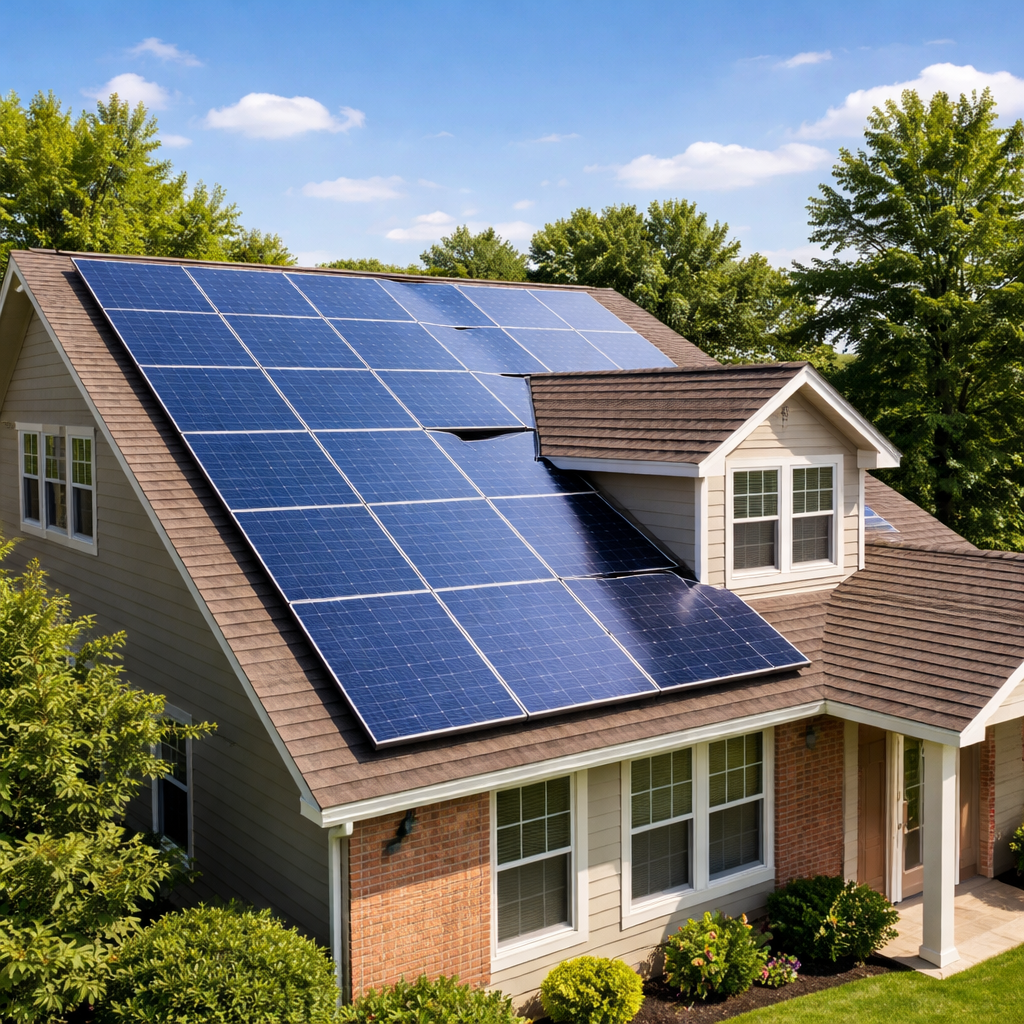
Solar rooftop systems install solar panels on building roofs, converting sunlight into electricity for residential, commercial, or industrial use. These systems significantly reduce electricity bills and carbon footprints. Systems can be grid-connected or battery-stored, often supported by government subsidies (e.g., PM Surya Ghar Yojana in India)
Solar Farm/Park Power Station
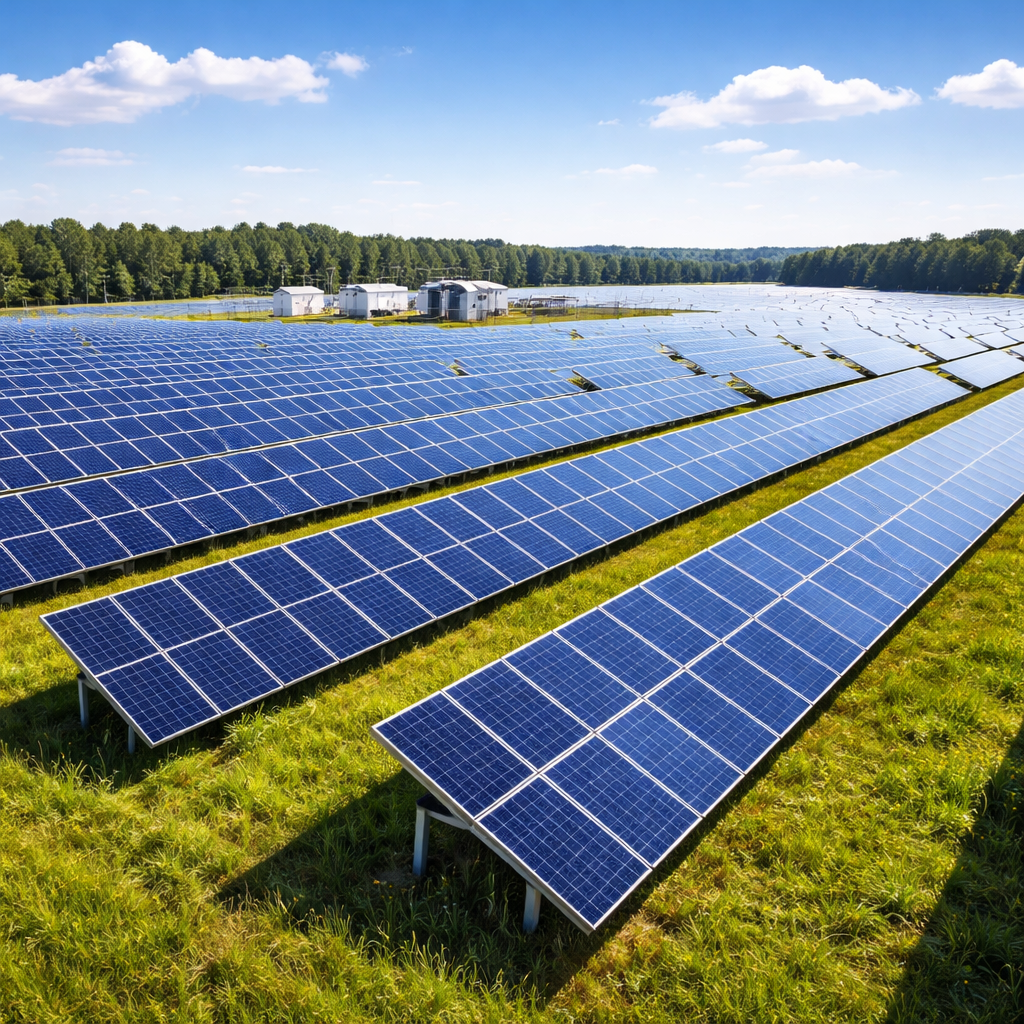
A large-scale installation where vast land areas are covered with ground-mounted photovoltaic (PV) panels that capture sunlight and convert it into electricity. The generated power is supplied to the grid, supporting sustainable energy demand while reducing dependence on fossil fuels and lowering carbon emissions. It improves grid reliability now.
Agrivoltaics (or Agri-PV/Agrisolar)
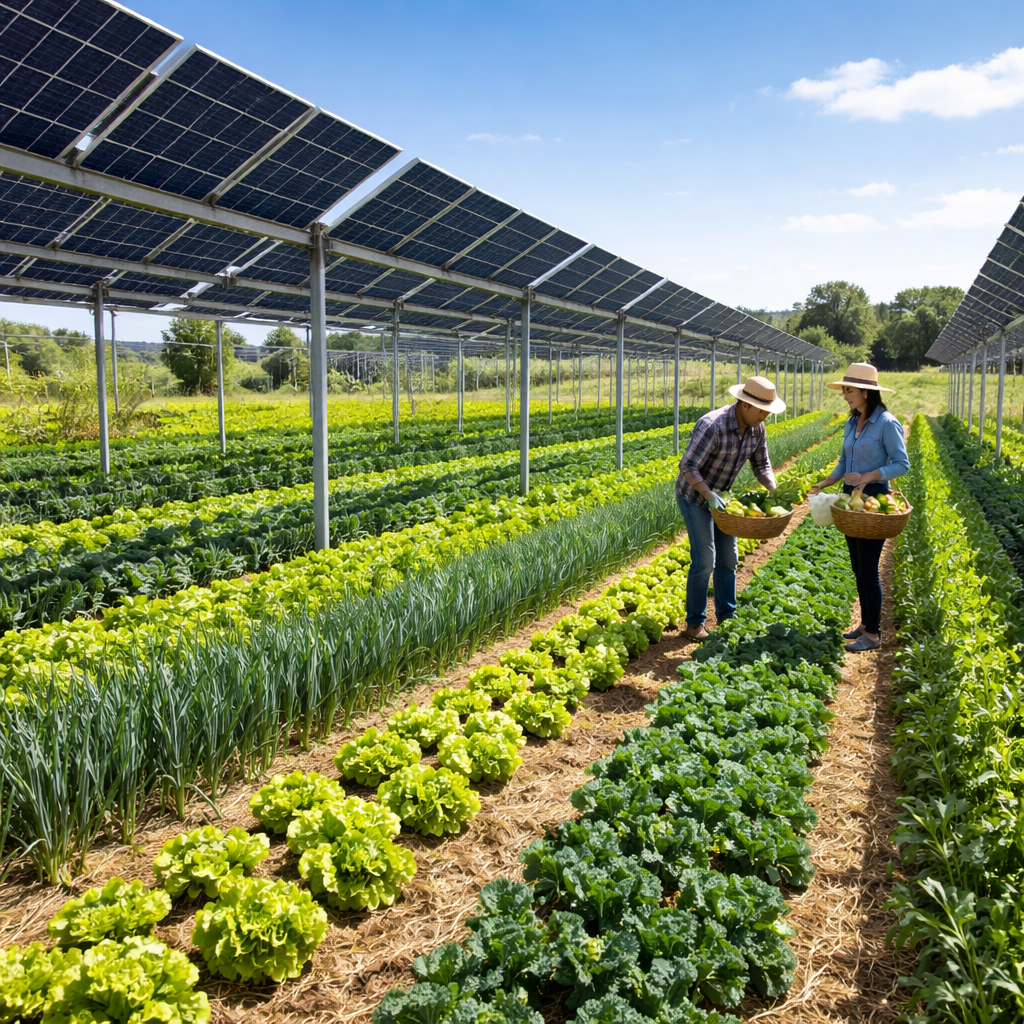
A land-based solar approach that integrates agriculture with solar power generation, enabling crops or livestock to coexist with photovoltaic panels on the same land. This method optimizes land use, enhances farm productivity, provides shade for crops, and generates clean electricity simultaneously.
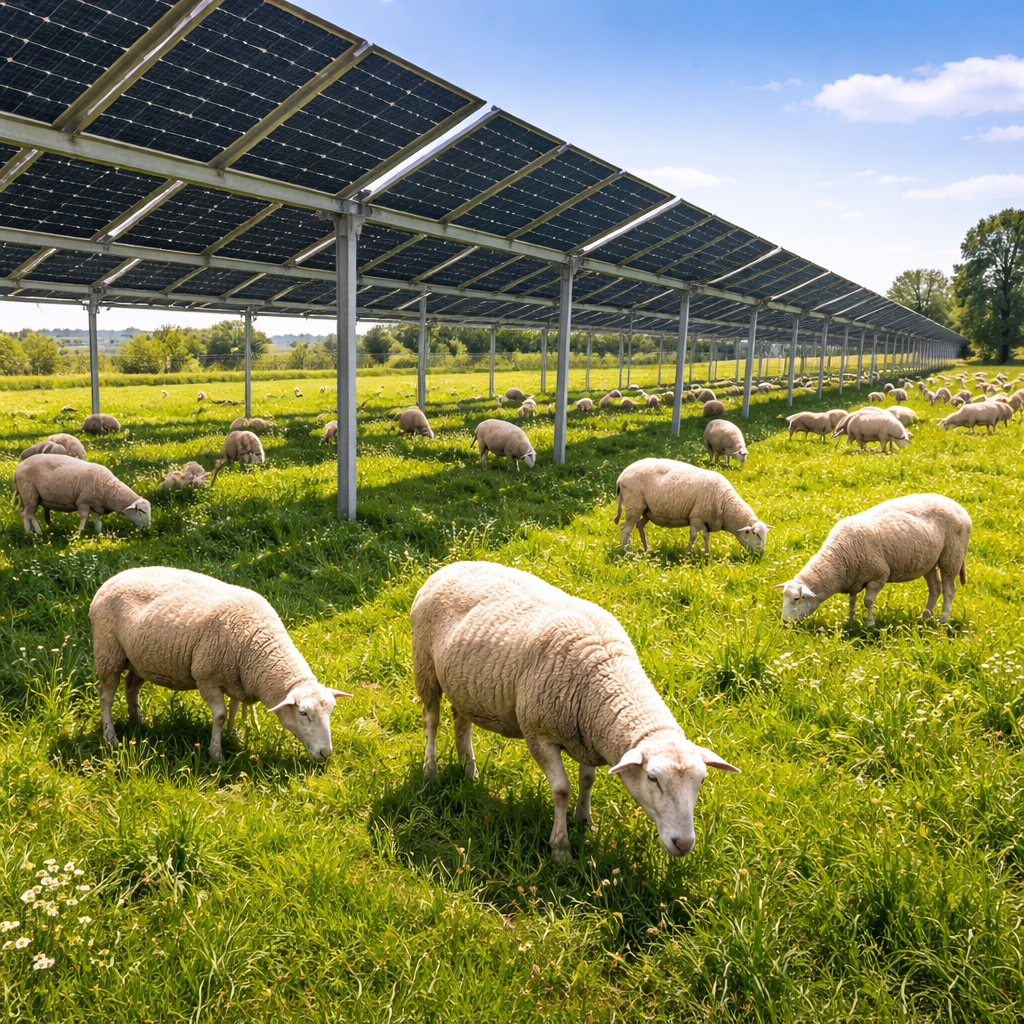
Solar Grazing
A type of agrivoltaic practice where livestock, commonly sheep, graze beneath solar panels to naturally control vegetation growth. This approach reduces maintenance costs, supports sustainable land management, and allows efficient use of land for both energy generation and animal grazing.
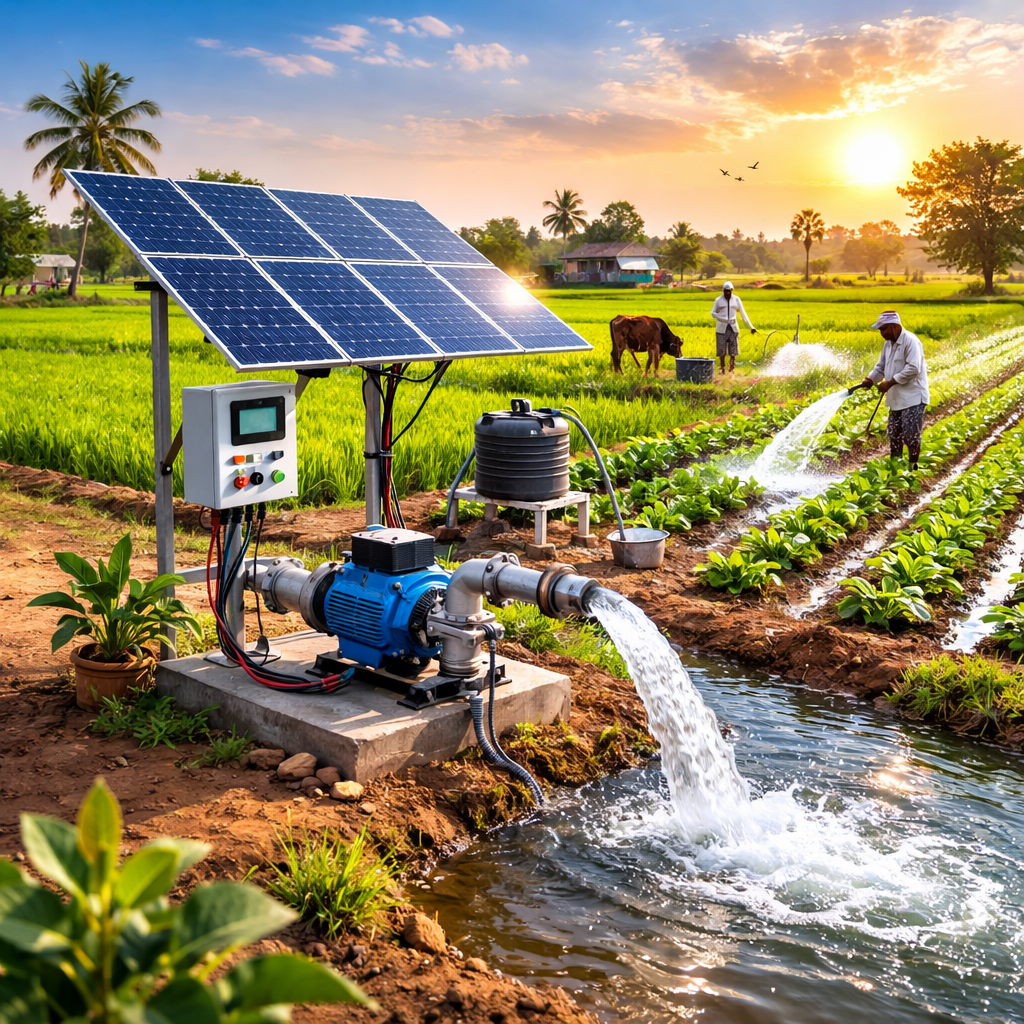
Solar Water Pumps
Solar water pumps use photovoltaic (PV) panels to convert sunlight into electricity, powering DC or AC motors to pump water for irrigation, livestock, and domestic use. They are eco-friendly, low-maintenance alternatives to diesel/electric pumps, ideal for remote areas. Key components include solar panels, a controller, and the pump unit.
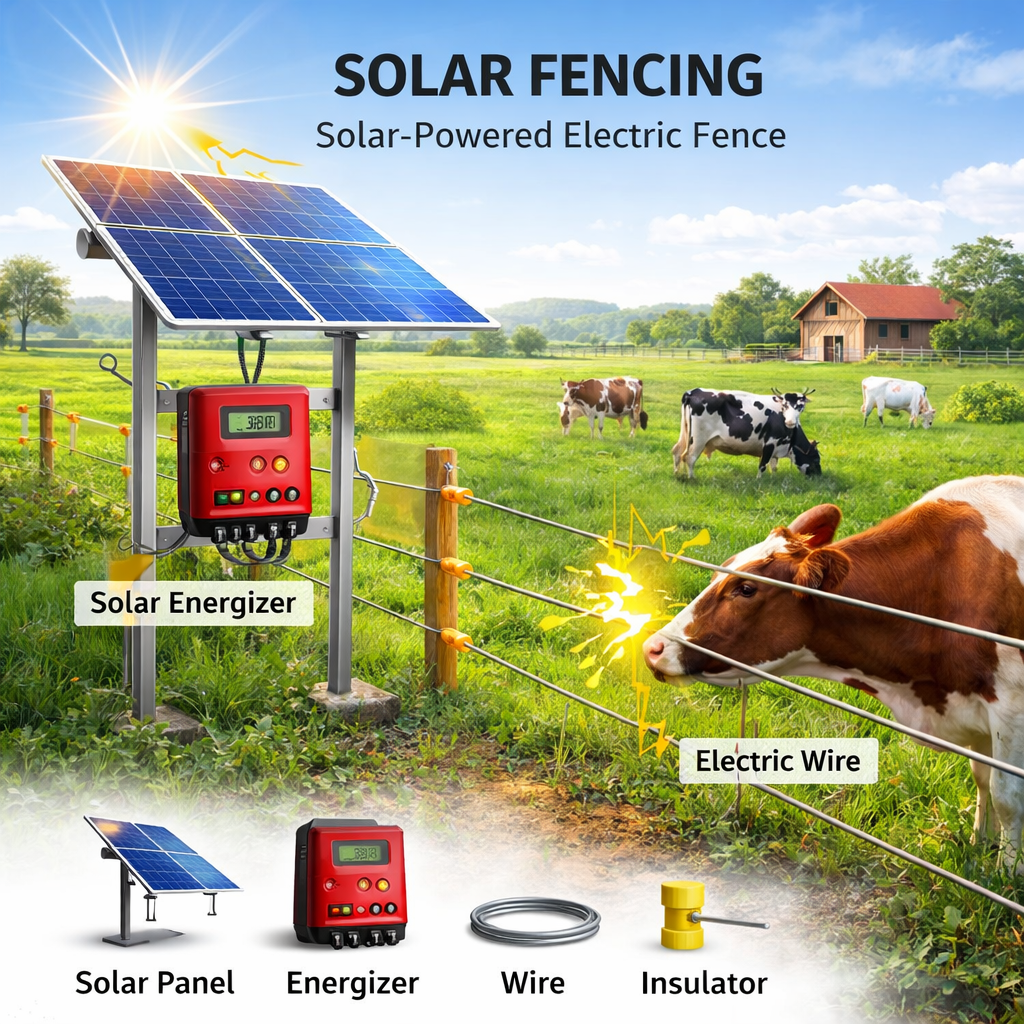
Solar Fencing
Solar fencing is an eco-friendly, off-grid security system that uses solar energy to power electric, non-lethal wires, creating a 24/7 deterrent against intruders or wild animals. It is commonly used for agricultural land protection, residential security, livestock containment, and boundary protection, delivering a safe, high-voltage, pulsed shock upon contact.
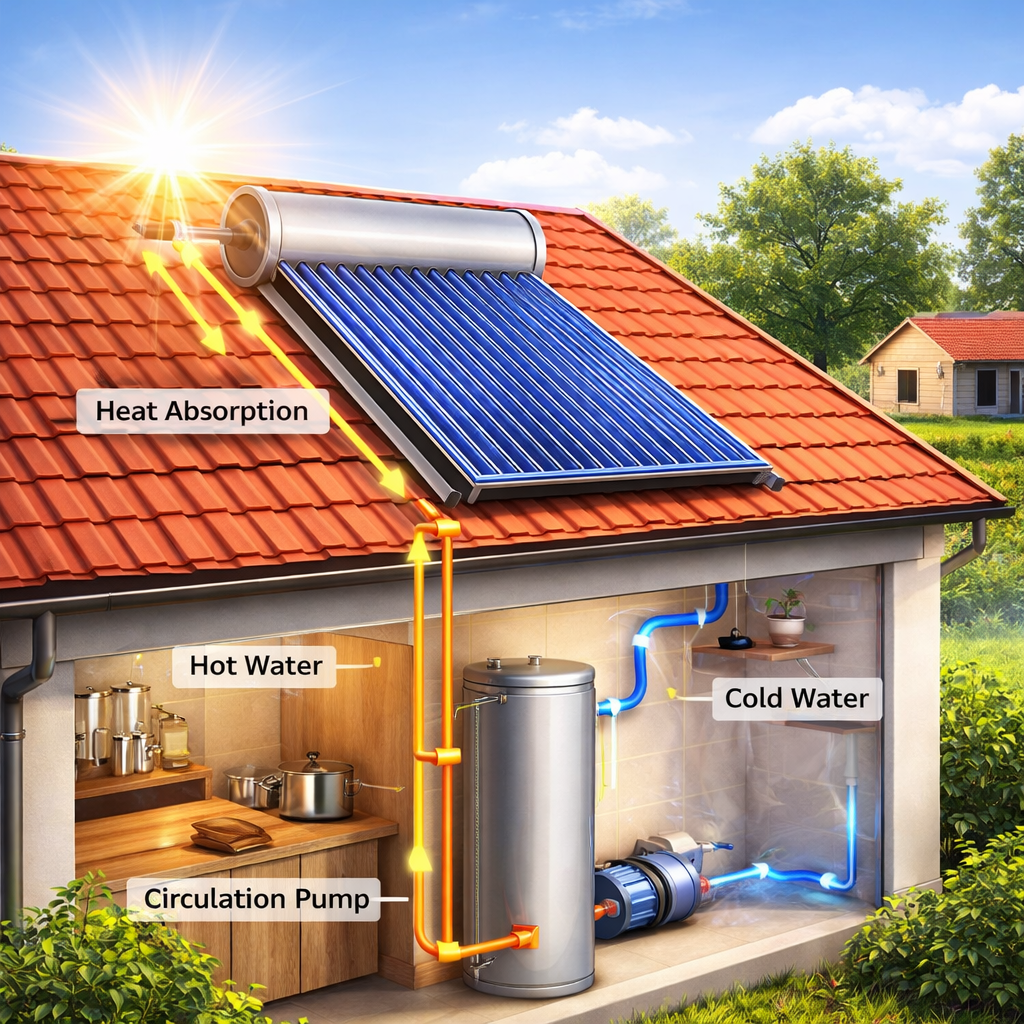
Solar Water Heating
Solar water heating (SWH) systems use sunlight to provide cost-effective hot water, typically saving ~1500 units of electricity annually for a 100-liter domestic unit. These systems utilize rooftop collectors (flat-plate or evacuated tubes) to heat water, which is then stored in an insulated tank, with common capacities of 100-5000 liters for homes, Hospitals, Hotels etc.
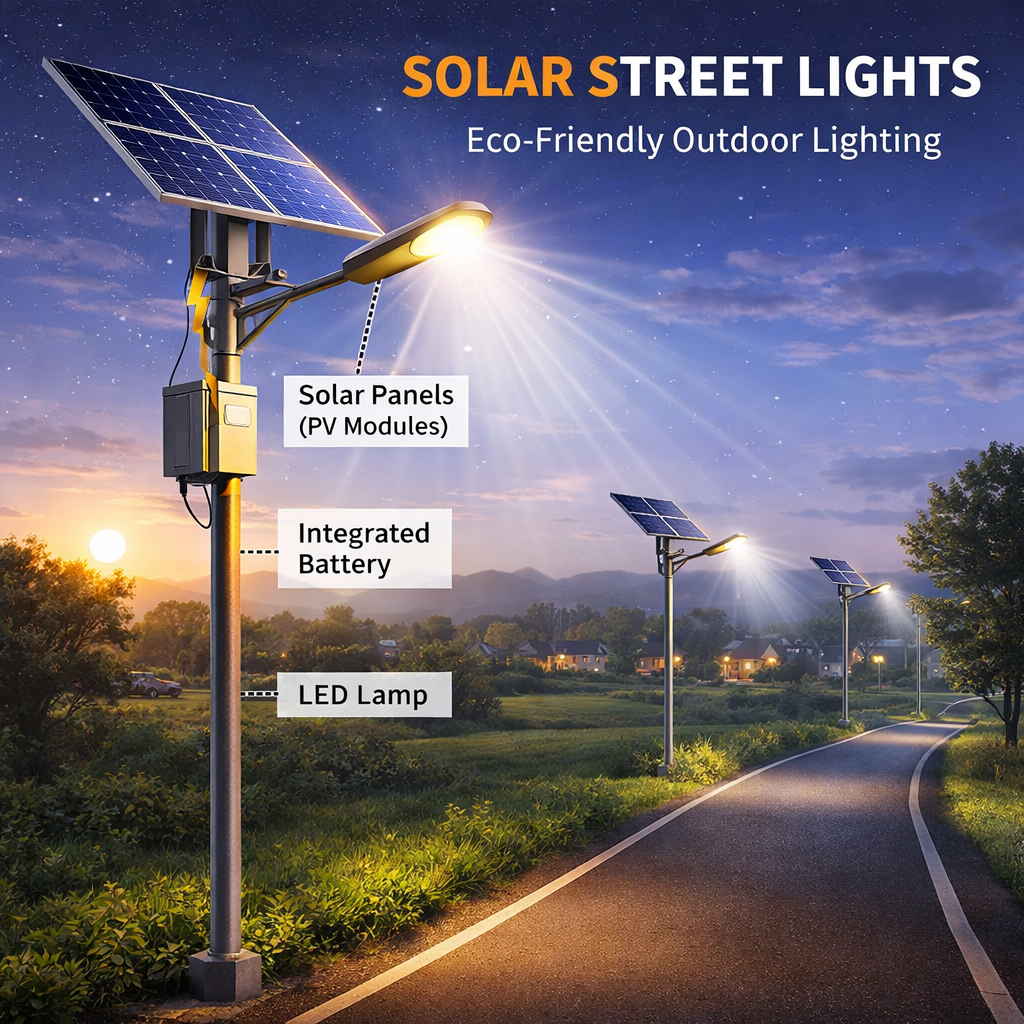
Solar Street Lights
Solar street lights are raised light sources which are powered by solar panels generally mounted on the lighting structure or integrated into the pole itself. The solar panels charge a rechargeable battery, which powers a fluorescent or LED lamp during the night.
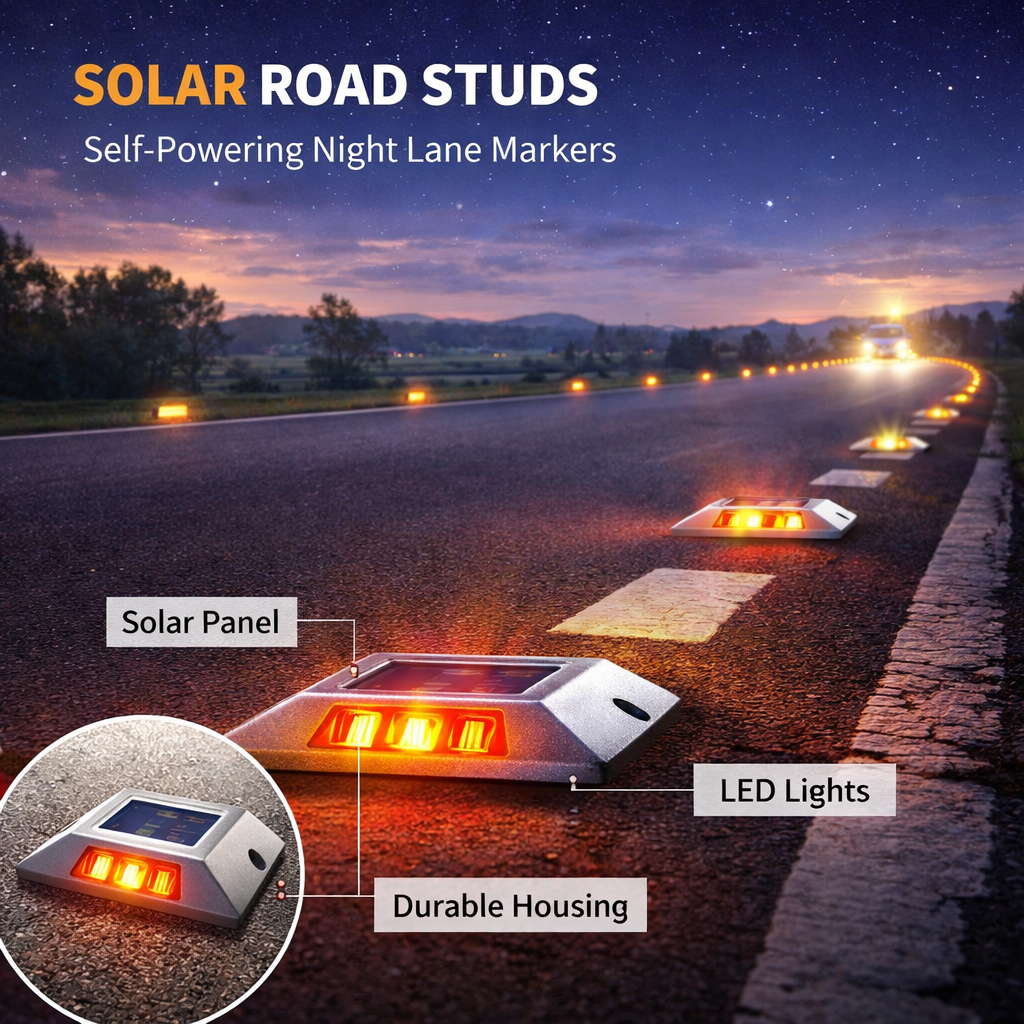
Solar Road Studs
Solar road studs are durable, solar-powered LED markers used for lane delineation, enhancing road safety by providing high visibility (800m–1200m) in fog, rain, and darkness. They automatically charge during the day, reducing reliance on headlights and offering 25-30 seconds of reaction time for drivers. These studs are commonly installed at dangerous curves, intersections, and road edges.
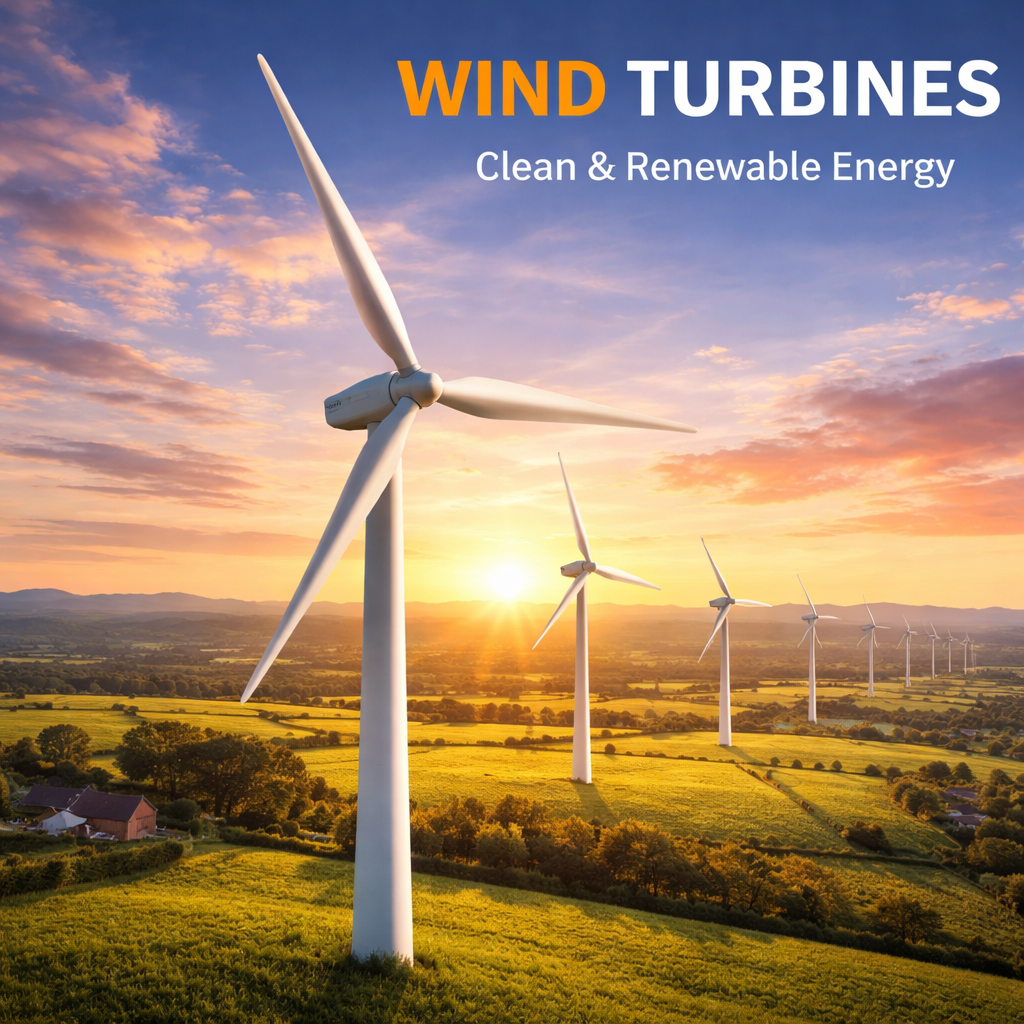
Wind Turbines
Wind turbines convert the kinetic energy of wind into electricity using large blades that drive a generator, providing a clean, renewable energy source. They are typically deployed in large, windy, onshore or offshore wind farms to power homes and grids. These structures, ranging up to 85m in blade length, play a critical role in lowering carbon footprints and reducing reliance on fossil fuels.
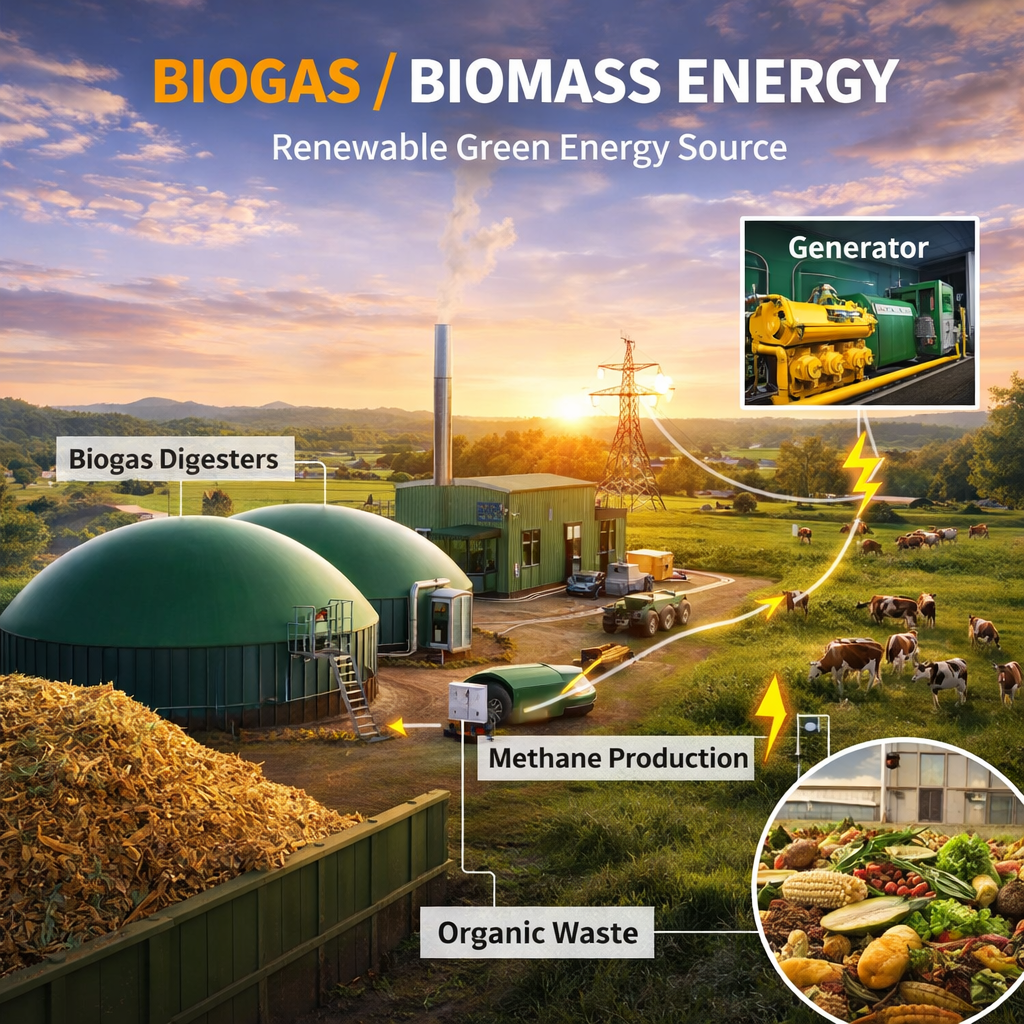
Biogas/Biomass Energy
Bioenergy is a renewable energy source derived from organic materials, known as biomass, including agricultural residues, wood waste, and dedicated energy crops. It is used to generate electricity, heat, and biofuels (like ethanol or biodiesel). Considered carbon-neutral, it helps mitigate climate change by recycling carbon dioxide absorbed by plants during growth.
Solar Panel Cleaning
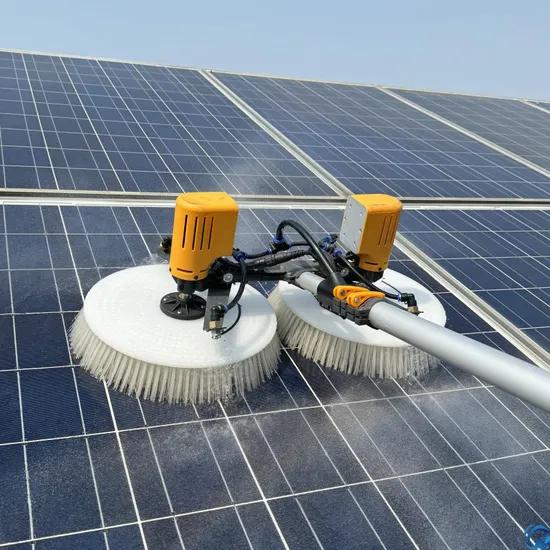
Solar panel cleaning equipment ranges from manual brushes and telescopic poles to automatic robots and drones, designed to remove dirt, dust, and bird droppings to maximize efficiency. Key tools include soft-bristled brushes, demineralized water systems, and robotic cleaners, which are essential for increasing energy output, especially in high-dust environments.